One Leak Could Cost You $1M – Why Fuel Tanker Safety Should Be Your 1 Priority
April 22, 2026
When a fuel tanker leaks, the damage spreads far beyond the initial spill. Cleanup costs, legal penalties, business interruption, and reputational harm can quickly escalate into millions of dollars. For fleet owners and logistics operators, investing in safety is not just a regulatory requirement — it is a financial imperative that protects your bottom line.
The True Cost of a Single Fuel Tanker Accident
A single fuel tanker incident can generate multiple layers of financial loss. The most visible cost is the spilled product itself — but that is only the beginning.
Direct cleanup and remediation costs can run into the hundreds of thousands or even millions of dollars. In a 2025 diesel spill in Waukee, Iowa, cleanup expenses exceeded $200,000. A Connecticut tanker spill in 2022 resulted in $350,000 in penalties and remediation payments. When a tanker crash in New Jersey spilled gasoline, the cleanup cost reached $1.4 million.
Legal penalties and regulatory fines add another layer. Transportation authorities impose strict penalties for hazardous material spills. Companies may face civil lawsuits from affected landowners, businesses, and local governments.
Business interruption costs often exceed the physical cleanup. While the fleet repairs or replaces the damaged vehicle, other trucks may sit idle due to delivery disruptions. Contractual penalties for missed deliveries can accumulate quickly.
Insurance premium hikes represent a long-term cost. Following major incidents, insurers raise premiums across the industry. P&I claims reached a 10-year high in 2024/25, with net claims hitting $3.1 billion — a 25% increase year-over-year. Premiums for the 2025/26 policy year have already increased 5-10%.
Reputational damage can be the hardest cost to quantify. A single high-profile spill can cost a logistics company future contracts and customer trust — losses that may take years to recover.
The biggest risk: catastrophic loss. In January 2025, a gasoline tanker accident in Niger State, Nigeria, claimed at least 86 lives when the overturned tanker exploded as people gathered to collect fuel. Just eight days earlier, another explosion at Dikko Junction killed 98 people and injured 69 others. The human and financial toll of such tragedies is immeasurable.
International Safety Standards Are Getting Stricter
Regulatory bodies worldwide continue to raise the bar for fuel tanker safety. Fleet operators must stay ahead of these requirements — or face serious consequences.
ADR 2025 (European Agreement concerning the International Carriage of Dangerous Goods by Road) took effect on January 1, 2025. Key changes include stricter requirements for transport documents in driver cabins and expanded provisions for battery-electric and hydrogen-powered dangerous goods vehicles. A unified ADR inspection checklist and new risk violation classification system will take effect by the end of 2025.
DOT (U.S. Department of Transportation) continues to update hazardous materials transport regulations. Proposed changes aim to simplify hazard communication requirements for fuels transported in tanker trucks while maintaining rigorous safety standards. The NTTC Bulk Hazmat Compliance Guide — 56th Edition 2025 — provides the latest requirements under Title 49 of the Code of Federal Regulations.
Compliance with these standards is not optional. Non-compliance can result in fines, operational shutdowns, and increased liability in the event of an accident.
Modern Fuel Tankers: Engineered to Prevent Catastrophe
The best way to manage accident costs is to prevent accidents from happening in the first place. Today‘s fuel tankers incorporate multiple safety features designed to eliminate common failure points.
Anti-rollover systems have become standard on modern fuel tank trailer. These systems use sensors to detect unstable conditions and automatically adjust braking or suspension to prevent tipping. Elliptical tank designs sit lower on the trailer frame, providing better rollover resistance than circular tanks.
Crash-tested tanks with reinforced construction provide critical protection in collision scenarios. UN/ADR certified tanks feature multi-layer construction and anti-rollover baffle designs that absorb impact forces.
Static grounding systems prevent the buildup of static electricity — a common ignition source. Grounding resistance must stay below 5Ω to safely dissipate electrical charges. Fire-resistant coatings on tank surfaces provide an additional layer of protection.
Internal baffle design reduces liquid sloshing by up to 40%, dramatically improving vehicle stability during cornering and sudden maneuvers. Emergency shut-off valves, high/low liquid level alarms, and anti-overflow sensors provide real-time monitoring and automatic intervention when needed.
Advanced braking systems with electronic stability control and well-balanced weight distribution ensure safe handling even under heavy loads.
Why Safety Is a Smart Investment, Not Just a Cost
When you purchase a fuel tanker equipped with modern safety features, you are making an investment that pays returns in multiple ways:
- Lower insurance premiums: Safer vehicles qualify for better rates
- Reduced downtime: Fewer accidents mean more operating days
- Regulatory compliance: Avoid fines and operational restrictions
- Customer confidence: Demonstrate commitment to safety and reliability
- Longer vehicle life: Quality construction extends service life
- Resale value: Safety-equipped tankers command higher prices on the used market
The upfront cost of safety features is modest compared to the potential liability of a single accident. A well-specified fuel tanker with proper safety systems will protect your investment and your reputation for years to come.
Choose a Fuel Tanker That Puts Safety First
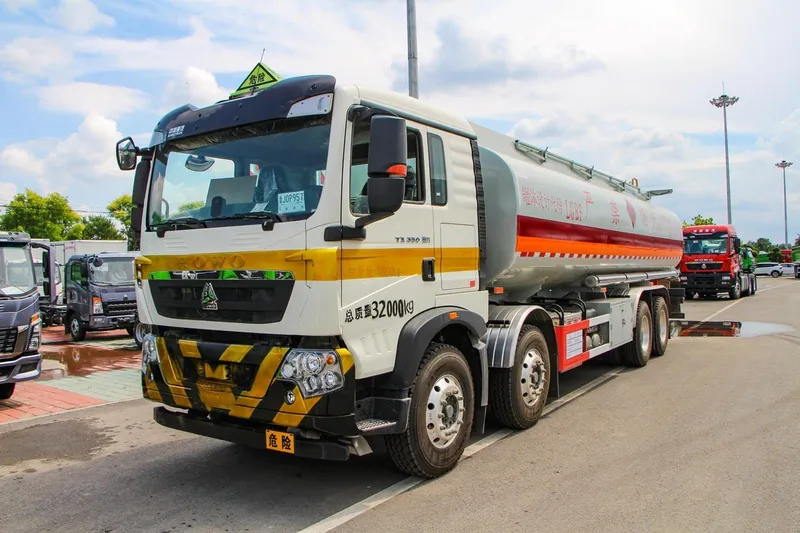
At gd trailers , we manufacture fuel tankers that meet the highest international safety standards. Our HOWO TX 8×4 fuel tanker truck features:
- High-grade, corrosion-resistant tank construction
- ADR-compliant safety systems including emergency shut-off valves and anti-static grounding
- Precision metering with overfill protection (±0.5%)
- Reinforced chassis for stable handling
- Comprehensive corrosion protection
Whether you operate in the Middle East, Africa, or Southeast Asia, our fuel tankers are engineered to perform safely and reliably in demanding conditions.

Contact our team today to discuss your fuel transport requirements and request a customized quote.