Container Trailer Showdown: Flatbed vs. Skeleton – Which One Fits Your Logistics Needs?
April 20, 2026
When moving shipping containers, choosing the right semi-trailer directly impacts your operational flexibility and return on investment. Two popular options dominate the market: the Flatbed Lowbed Semi Trailer and the Skeleton Container Trailer. Both transport containers, but they serve very different purposes. Understanding their strengths helps you make a smarter purchase decision.
What Is a Flatbed Lowbed Semi Trailer?
A low flatbed trailer features a full, flat deck made of high-strength steel. This design allows it to carry standard shipping containers using twist locks, just like a dedicated container chassis. However, its real advantage lies in versatility. When you remove the container, you still have a complete flatbed surface. This means you can also transport machinery, steel beams, timber, pallets, construction materials, and other general cargo.
Key Features of Flatbed Lowbed Semi Trailer:
- Full flat deck with reinforced structure
- Twist locks for 20ft and 40ft containers
- High load capacity (40-60 tons)
- Side and rear loading access
- Suitable for multiple cargo types
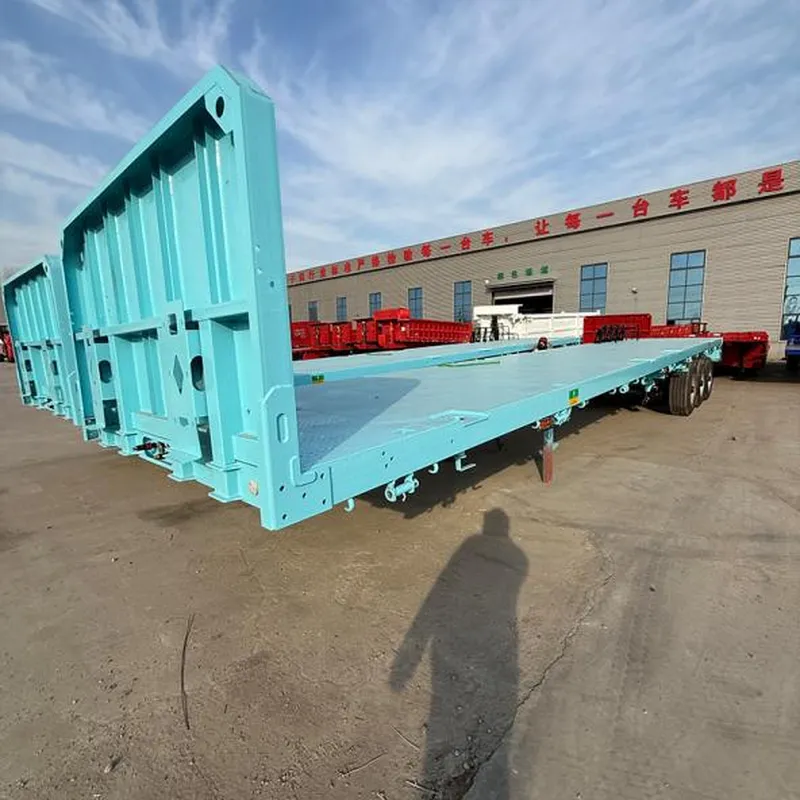
What Is a Skeleton Container Trailer?
A Skeleton Container Trailer (also called a container chassis) has no solid deck. Instead, it consists of a frame with side rails and cross members designed specifically to hold ISO containers at the corner castings. The frame is “skeleton-like” – open in the middle. This design reduces weight significantly, allowing higher payload capacity for containerized goods. However, it cannot carry general cargo without a container mounted on top.
Key Features of Skeleton Container Trailer:
- Lightweight frame construction
- Twist locks at four corners
- Optimized for container-only transport
- Lower tare weight means more container payload
- Cannot carry non-containerized goods
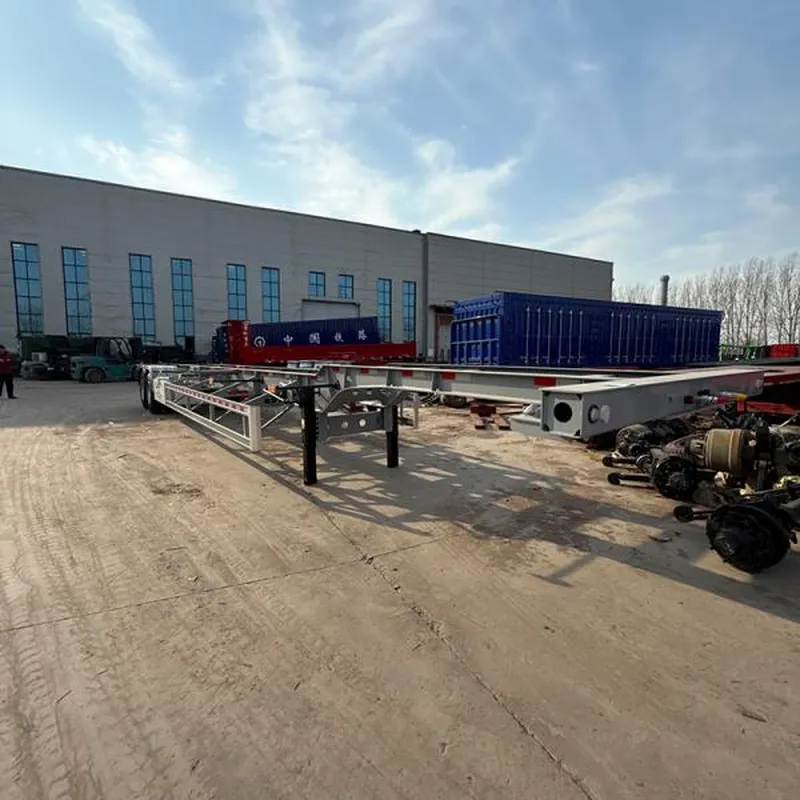
Flatbed vs. Skeleton: Head-to-Head Comparison
| Feature | Flatbed Lowbed Semi Trailer | Skeleton Container Trailer |
| Primary use | Containers + general cargo | Containers only |
| Deck type | Full flat steel deck | Open frame (skeleton) |
| Tare weight | Heavier | Lighter |
| Payload capacity | Lower (due to own weight) | Higher (up to 2-3 tons more) |
| Cargo flexibility | High – can carry machinery, steel, timber, pallets | Low – only containers or containerized loads |
| Loading access | Side and rear | Rear only (container slides on) |
| Best for | Mixed fleets, varied cargo | Dedicated container transport |
Which One Should You Choose?
Choose a Flatbed Lowbed Semi Trailer if:
- Your fleet handles both containerized and general cargo
- You want one trailer for multiple job types
- You occasionally transport machinery, steel, or oversized goods
- Maximum payload is not your only concern – flexibility matters more
Choose a Skeleton Container Trailer if:
- You transport containers exclusively (port drayage, rail intermodal)
- You need maximum legal payload for heavy container loads
- Your operation rarely handles non-containerized freight
- You want the lightest trailer possible to save fuel and increase cargo weight
Real-World Application Example
A logistics company in West Africa imports both containerized consumer goods and construction materials like steel pipes and timber. They choose Flatbed Lowbed Semi Trailers because the same trailer can carry a container from the port one day, then haul steel beams to a construction site the next day. This maximizes asset utilization and reduces the number of trailers needed.
A dedicated container drayage operator moving 40ft containers from a port to inland depots only handles boxes. They prefer Skeleton Container Trailers because the lighter frame allows them to carry 2-3 extra tons per trip, significantly improving annual revenue.
Why Choose Global Diamond for Your Container Trailers?
At Shandong Global Diamond Automobile Technology Co., Ltd. , we manufacture both Flatbed Lowbed Semi Trailers and Skeleton Container Trailers to international standards. Our trailers feature:
- High-strength steel construction for long service life
- Precision welding and anti-corrosion painting
- Customizable axle configurations, twist lock layouts, and deck lengths
- 20+ years of export experience to Africa, Middle East, Southeast Asia, and beyond
- Strict quality control from raw material to final inspection
Whether you need the versatility of a flatbed or the lightweight efficiency of a skeleton chassis, we deliver reliable, cost-effective solutions tailored to your logistics needs.
Frequently Asked Questions
Can a skeleton trailer carry anything other than containers?
No. A Skeleton Container Trailer has no solid deck. You cannot place loose cargo directly on the frame. It requires a container or a similar box structure with corner castings.
Can a flatbed lowbed semi trailer carry two containers?
Yes, some flatbed models with extended length can carry two 20ft containers simultaneously using multiple twist lock sets.
Which trailer is more expensive?
Generally, a Flatbed Lowbed Semi Trailer costs more due to the full steel deck and heavier construction. A Skeleton Container Trailer is lighter and often less expensive.
Which trailer is better for mixed cargo operations?
The Flatbed Lowbed Semi Trailer is the clear winner. It gives you container capability plus the flexibility to handle general freight.
Need expert advice on selecting the right container trailer for your operation? Contact Shandong Global Diamond today. We help you match the right equipment to your cargo, routes, and budget – so you move more, earn more.