What Is a Container Trailer and How Do You Choose the Right One?
May 19, 2026
In the world of logistics and global trade, shipping containers are the undisputed kings of cargo. But while these steel boxes cross oceans on massive ships, they rely on a different kind of workhorse to travel the “last mile” on land: the container trailer.
Whether you are expanding your fleet or upgrading your logistics operations, selecting the right container trailer is a critical decision that directly impacts your efficiency, safety, and bottom line.
In this comprehensive guide, we will break down what a container trailer is, explore the most common types, and give you a step-by-step roadmap to choosing the perfect model for your business needs.
What Is a Container Trailer?
A container trailer (also commonly referred to as a container chassis or skeletal trailer) is a specialized semi-trailer designed specifically to secure and transport standardized ISO shipping containers.
Unlike standard flatbeds, a dedicated container trailer features a minimalist, high-strength steel frame equipped with specialized locking mechanisms called twistlocks. These twistlocks match the corner castings of standard 20ft, 40ft, or 45ft containers, ensuring the load remains perfectly secure even at highway speeds or during sharp turns.
Common Types of Container Trailers
Not all cargo is created equal, and neither are the trailers built to carry it. Depending on your operational requirements, you will likely choose from one of these three primary configurations:
1. Skeletal Container Trailer (Chassis)
The skeletal trailer is the minimalist backbone of container logistics. It consists of a welded steel frame, axles, wheels, and twistlocks, with no floor or platform.
- Best For: Standard port-to-warehouse transport where weight reduction and fuel efficiency are priorities.
- Learn More: Check out our high-durability Skeletal Container Trailers designed for heavy-duty port operations.
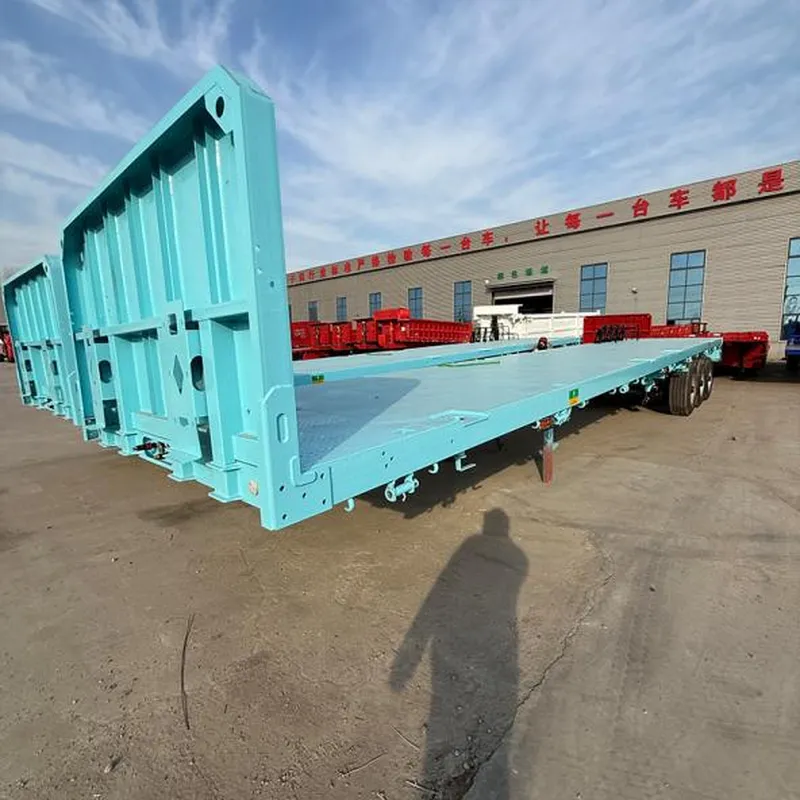
2. Flatbed Container Trailer
A flatbed lowbed trailer features a solid wood or steel platform over the chassis, equipped with integrated twistlocks that can be flipped down when not in use.
- Best For: Versatility. It can haul standard containers, but when empty, it can also transport bulk cargo, construction materials, or machinery.
- Learn More: Explore our versatile range of Flatbed Container Trailers for multi-purpose hauling.
3. Container Side Loader (Self-Loading Trailer)
These advanced trailers feature integrated hydraulic cranes mounted to the chassis, allowing the driver to load or unload a container independently within minutes, without needing a separate crane or forklift.
- Best For: Remote locations, tight urban spaces, or logistics hubs lacking heavy lifting equipment.
How to Choose the Right Container Trailer: A Step-by-Step Guide
Choosing the wrong trailer can lead to overloaded axles, regulatory fines, increased wear and tear, or worse—safety hazards on the road. To avoid these pitfalls, evaluate your options based on the following key factors:
Step 1: Match the Trailer to Your Container Size
Shipping containers come in standard sizes, primarily 20ft, 40ft, and 45ft. Your trailer must match these dimensions.
- If you exclusively haul 20ft containers, a compact, dedicated 20ft chassis is ideal.
- If your cargo varies, look into an extendable or bomb-cart chassis that can adjust to fit multiple sizes, or a 40ft trailer that features mid-frame twistlocks to carry either one 40ft container or two 20ft containers simultaneously.
Step 2: Calculate Your Weight Capacity Requirements
The weight of your typical cargo dictates the chassis design and the number of axles you need. Overloading a trailer is a severe legal and safety violation.
| Container Size & Cargo Weight | Recommended Axle Configuration |
| Light to Medium Loads (20ft / 40ft standard) | 2-Axle Chassis |
| Heavy Loads / Liquid ISO Tanks | 3-Axle or 4-Axle Chassis (Distributes weight legally) |
Pro Tip: If you frequently operate in regions with strict federal bridge weight laws, opting for a tri-axle or spread-axle configuration is essential to keep your fleet compliant. Learn more about regional compliance on our Technical Specification Support Page.
Step 3: Assess the Loading/Unloading Environment
- Do your destination sites have loading docks or heavy forklifts? If yes, a standard skeletal or flatbed trailer is perfect.
- Are you delivering to remote drop-zones, farms, or independent warehouses? You might want to invest in a self-loading side lifter to eliminate the need for local crane rentals.
Step 4: Prioritize Material and Manufacturing Quality
A container trailer undergoes immense stress from heavy loads and twisting forces. Look for trailers built with:
- High-Tensile Steel (e.g., Q344 or T700): Offers maximum strength while keeping the trailer’s tare weight low.
- Submerged Arc Welding: Ensures seamless, heavy-duty bonds that resist cracking over years of rugged use.
- Premium Axle and Braking Brands (e.g., BPW, FUWA, WABCO): High-quality components reduce maintenance downtime and ensure shorter braking distances.
Why Partner with GD Trailer?
At GD Trailer, we understand that a container trailer is a long-term investment in your business’s productivity. We manufacture our trailers using industry-leading automated welding technology, premium high-tensile steel, and world-class components to ensure your cargo stays safe, mile after mile.
Ready to find the perfect match for your fleet?
- Browse our complete Container Trailer Product Catalog.
- Have custom requirements? Contact Our Engineering Experts today for a tailored quote and structural consultation.