

What Is a Truck Tractor and How It Powers Modern Logistics
February 11, 2026
Introduction to Truck Tractors
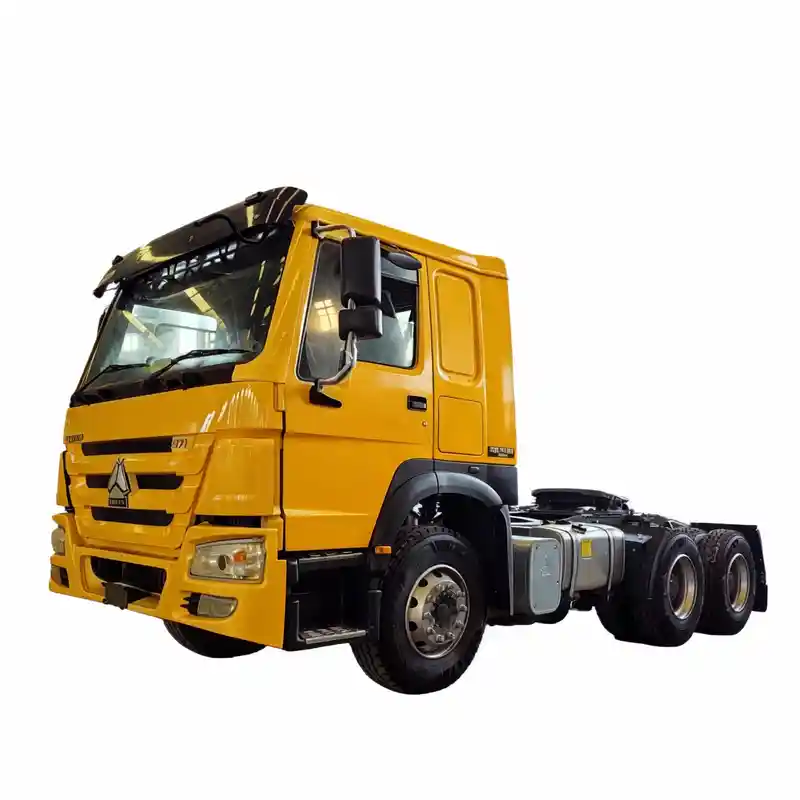
A truck tractor is a heavy-duty vehicle designed to pull semi-trailers and other large loads across long distances. Unlike straight trucks, a truck tractor does not carry cargo on its own body. Instead, it connects to a trailer through a fifth-wheel coupling system, allowing the tractor and trailer to function as one powerful transport unit.
In global logistics, construction, mining, and long-haul transportation, truck tractors are the backbone of freight movement. From ports and warehouses to cross-border highways, they provide the flexibility and strength needed to move heavy cargo efficiently and safely.
How a Truck Tractor Works
A truck tractor operates by using a powerful diesel engine to generate torque and pulling force. The rear drive axles transfer power to the road, while the fifth wheel mounted behind the cab locks onto the trailer’s kingpin. This design allows the tractor to support part of the trailer’s weight and maintain stability during long-distance travel.
The separation between tractor and trailer also makes logistics more flexible. A single truck tractor can haul multiple types of trailers, such as flatbeds, tankers, container chassis, and refrigerated trailers, simply by switching connections.
Main Types of Truck Tractors
Truck tractors are commonly classified by axle configuration, engine power, and application.
A standard road model is widely used for highway freight. For heavy and challenging loads, the 6×4 tractor truck provides extra traction and stability on rough or steep roads. Long-haul transport often uses sleeper cab models for driver comfort, while day cabs are popular for short-distance distribution.
For companies that need cost-effective solutions, a used international truck can offer strong performance at a lower investment, especially for startups and fleet expansion.
Why Truck Tractors Are Essential in Logistics
Truck tractors are critical because they combine power, adaptability, and efficiency. Their modular structure allows one tractor to serve many transport roles. This reduces fleet costs, improves asset utilization, and speeds up operations.
They are also engineered for endurance. With reinforced frames, high-capacity engines, and advanced braking systems, truck tractors can handle continuous operation under heavy loads, making them ideal for industrial supply chains.
Applications Across Industries
Truck tractors are used in almost every major industry.
- In logistics and freight transport, they move containers, palletized goods, and bulk cargo.
- In construction, they haul heavy machinery, steel, and building materials.
- In energy and mining, they transport fuel, equipment, and minerals over long distances.
- In agriculture, they carry grain, livestock trailers, and fertilizer tanks.
Their adaptability makes them one of the most valuable commercial vehicles in the world.
Choosing the Right Truck Tractor
Selecting the right truck tractor depends on load weight, road conditions, and operating distance. Long-haul fleets usually focus on fuel efficiency and driver comfort, while heavy-duty operations require higher horsepower and reinforced drivetrains.
Engine capacity, axle configuration, transmission type, and maintenance support should all be considered before purchasing. A reliable supplier with global export experience can help match the correct model to your business needs.
Why Choose GD Trailer as Your Truck Tractor Supplier
GD Trailer is a professional manufacturer and exporter specializing in heavy commercial vehicles. The company provides a full range of tractor truck solutions designed for long-haul, construction, and industrial transport.
With strict quality control, competitive pricing, and global shipping support, GD Trailer helps businesses build powerful and dependable transport fleets.
Future of Truck Tractors
As logistics continues to expand worldwide, truck tractors are becoming more advanced. Modern models integrate intelligent braking systems, fuel-saving engines, GPS fleet management, and enhanced driver safety features. These improvements increase efficiency while reducing operating costs and environmental impact.
Truck tractors will remain the core of land transportation, supporting global trade and infrastructure development for decades to come.